
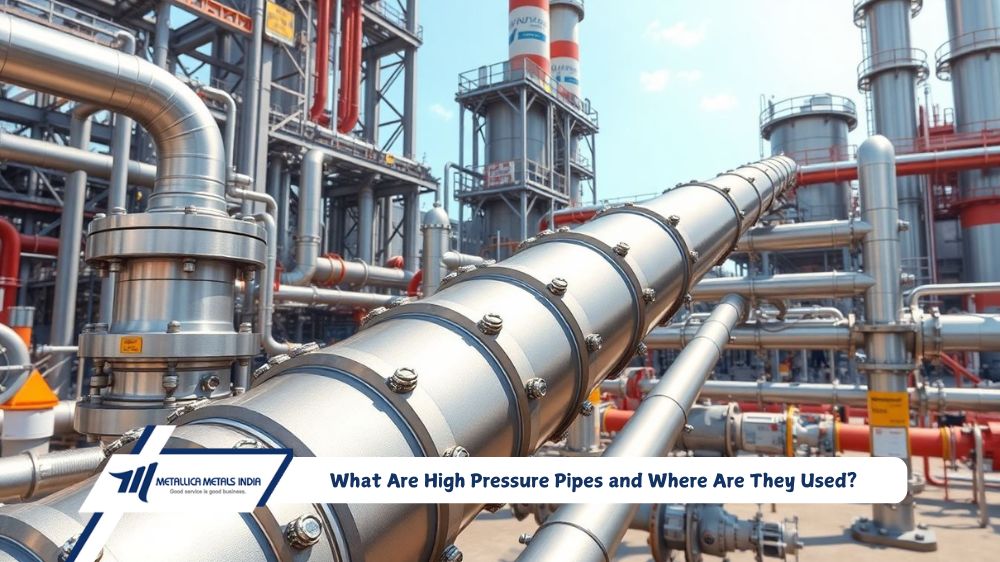
High pressure pipes play a critical role in industries where fluids or gases flow under extreme pressure. These pipes are built to withstand high levels of internal pressure without leaking, bursting, or deforming. Engineers use them in demanding environments where standard pipes would fail.
But what exactly are high pressure pipes? What makes them different, and where are they used? In this blog, we’ll answer these questions in detail and explore how these specialized pipes support vital industries across the globe.
What Are High Pressure Pipes?
High pressure pipes are specially designed piping systems that can handle internal pressures far higher than ordinary pipes. These pipes are manufactured using strong metals and alloys, such as carbon steel, stainless steel, and alloy steel. Some versions may be seamless, while others may be welded, depending on the application.
They come in various sizes, thicknesses, and pressure ratings, often classified by standards such as ASTM, ASME, and DIN. Their structure and composition allow them to perform reliably even when transporting steam, gas, chemicals, or high-temperature fluids at very high pressures.
Characteristics of High Pressure Pipes
High pressure pipes must meet strict mechanical and chemical requirements. Their key features include:
- High Tensile Strength: They resist cracking and deformation under pressure.
- Excellent Corrosion Resistance: Especially important in chemical or offshore environments.
- Thermal Stability: Suitable for both high and low temperatures.
- Seamless or Precision Welded Construction: Minimizes the risk of leaks or weak spots.
- Durability: They can endure continuous stress and pressure fluctuations.
These characteristics make high pressure pipes the backbone of many industrial operations.
Where Are High Pressure Pipes Used?
High pressure pipes are used across multiple sectors where safety, strength, and performance are non-negotiable. Below are some of the most common industries and applications:
1. Oil and Gas Industry
The oil and gas sector is one of the largest users of high pressure pipes. From upstream exploration to downstream refining, these pipes are essential.
Applications:
- Transporting crude oil and natural gas over long distances
- Withstanding extreme offshore and subsea conditions
- High-pressure drilling operations
- Refineries and petrochemical units
In such environments, pipes must endure high pressures, corrosive fluids, and extreme temperatures. Stainless steel and alloy steel high pressure pipes are commonly used in this sector.
2. Power Generation
Power plants, especially thermal and nuclear, require high pressure piping systems to transport steam and water under extreme temperatures and pressure conditions.
Applications:
- Boiler systems
- Steam lines
- Heat exchangers
- Turbine inlets and outlets
High pressure pipes maintain system efficiency and safety by reducing the risk of failures or explosions under load.
3. Chemical and Petrochemical Industry
This sector uses aggressive chemicals and high-pressure processes in production. Any failure in piping could lead to hazardous leaks and losses.
Applications:
- Chemical reactors and processing units
- High-pressure chemical transportation
- Acid and solvent handling systems
Corrosion resistance and chemical stability are key here, making stainless steel the preferred material.
4. Hydraulic Systems
Hydraulic systems rely on pressurized fluids to transmit energy. These systems need pipes that won’t rupture under intense pressure.
Applications:
- Industrial machinery
- Construction equipment
- Aerospace hydraulic circuits
High pressure hydraulic pipes are usually made of carbon steel and are designed to offer maximum flexibility and burst resistance.
5. Marine and Subsea Applications
In deep-sea operations, high pressure pipes are used to transport fluids and gases in challenging underwater environments.
Applications:
- Subsea oil extraction
- Underwater pipelines
- Ballast and cooling water systems
Pipes used in these applications must offer excellent corrosion resistance to seawater and be able to handle variable pressure loads.
6. Food and Beverage Industry
Surprisingly, high pressure pipes are also used in hygienic processing environments where they transport steam or hot fluids for sterilization.
Applications:
- Steam lines for cleaning
- High-pressure fluid delivery for pasteurization
- Beverage carbonation systems
Stainless steel is widely used due to its sanitary and non-reactive properties.
Benefits of Using High Pressure Pipes
Choosing high pressure pipes provides many benefits in industrial systems:
- Safety: They reduce the risk of pipe bursts and leaks, especially in critical systems.
- Reliability: These pipes can function under continuous pressure cycles without failure.
- Efficiency: Less downtime and maintenance lead to better productivity.
- Versatility: Suitable for a wide range of applications and environments.
- Longevity: Durable materials offer a longer life span and better ROI.
Standards and Certifications
High pressure pipes must meet specific standards and undergo rigorous testing. Some common certifications include:
- ASTM A106 / A335 / A312
- ASME B31.1 / B31.3
- DIN 17175
- ISO 9001 and PED (Pressure Equipment Directive)
These ensure the pipe’s quality, strength, and suitability for high-pressure applications.
Conclusion
High pressure pipes are a crucial part of many industrial systems. Whether transporting oil, gas, chemicals, or steam, they deliver performance under conditions that would break regular pipes. Their strength, safety, and reliability make them indispensable across sectors like oil and gas, power generation, and chemical processing.
If you’re sourcing high pressure pipes, always ensure they meet the appropriate standards and are made from high-quality materials. Investing in the right pipes not only ensures operational success but also enhances safety and efficiency in the long run.