
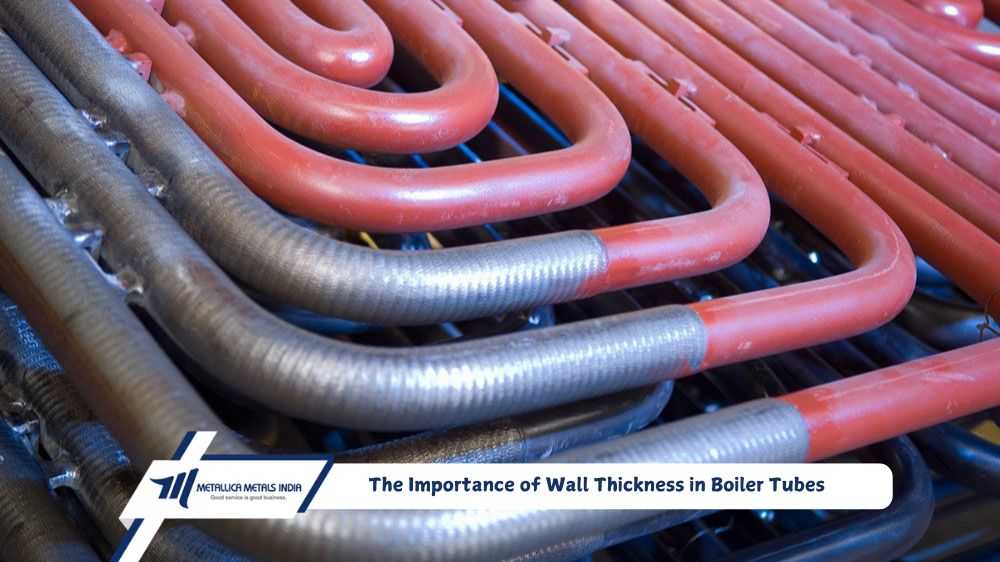
Boiler tubes are a critical component in industries where heat and pressure are essential such as power plants, refineries, and chemical processing units. Among the many specifications that determine the performance of boiler tubes, wall thickness plays one of the most important roles. It’s not just about durability; it’s about how efficiently and safely a boiler system operates under extreme conditions.
In this blog, we’ll explore why wall thickness matters in boiler tubes, how it’s determined, and what happens when it’s not taken seriously.
Why Wall Thickness Matters in Boiler Tubes
The wall thickness of a boiler tube directly affects how it handles pressure, heat, and corrosion. These tubes are exposed to high-temperature steam and sometimes corrosive materials. If the walls are too thin, they may burst under pressure. If they’re too thick, it might reduce heat transfer efficiency or unnecessarily increase costs.
The ideal wall thickness is the balance between safety, thermal efficiency, and long-term reliability.
Pressure Resistance and Wall Strength
One of the main reasons wall thickness is so important is pressure resistance. Boiler tubes carry high-pressure steam or fluid. Thicker walls offer better mechanical strength, meaning they can withstand internal pressure without deforming or rupturing.
For example, in high-pressure boiler systems (above 100 bar), the required wall thickness is much higher than in low-pressure applications. Failing to meet these standards can lead to catastrophic failures, plant shutdowns, or worse safety hazards.
Thermal Conductivity and Heat Transfer
While strength is essential, boiler tubes also need to conduct heat effectively. Wall thickness affects heat transfer. Thicker walls may slow down the rate of heat transfer between the hot gases and the fluid inside the tube.
This is why manufacturers must consider both pressure and heat transfer when determining the correct wall thickness. The goal is to ensure the fluid inside the tube heats up quickly without compromising the structural integrity of the tube.
Corrosion and Erosion Resistance
Boiler tubes often deal with corrosive gases, steam, or even acidic fluids. Over time, this leads to thinning of the tube wall. If the original wall thickness is already minimal, the tube may fail sooner than expected.
By selecting the right wall thickness, along with corrosion-resistant materials like alloy steel or stainless steel, the life span of boiler tubes can be significantly increased.
In industries like chemical processing or refineries, where corrosion is a major concern, extra wall thickness acts as a buffer against gradual erosion.
Standards for Wall Thickness in Boiler Tubes
Several international standards define the required wall thickness for different types of boiler tubes:
- ASTM A192 / A179: Carbon steel seamless tubes for high-pressure service.
- ASME SA-213: Seamless ferritic and austenitic alloy steel tubes.
- DIN 17175 / BS 3059: European and British standards often followed in global projects.
These standards take into account:
- Operating pressure
- Operating temperature
- Tube diameter
- Application type (fire-tube, water-tube, economizers, superheaters, etc.)
Always consult a reliable boiler tube supplier in India or your engineering team when selecting boiler tube wall thickness based on these standards.
Cost vs. Performance: Finding the Right Balance
Thicker tubes are generally more expensive due to higher material usage and weight. However, opting for a lower thickness just to cut costs may result in frequent maintenance, early replacement, or system breakdown which is far more expensive in the long run.
That’s why it’s important to strike a balance. Work with manufacturers that offer:
- Accurate thickness control
- Certified quality materials
- Custom sizes based on your specific system design
Industry-Specific Requirements
Different industries have different requirements for wall thickness:
- Power Plants: Often require thick-walled alloy steel tubes for high-pressure steam systems.
- Oil & Gas: Need corrosion-resistant tubes with adequate thickness to handle aggressive chemicals.
- Food Industry: Uses sanitary tubes, where thinner walls may be acceptable, but cleanliness and corrosion resistance are vital.
The application defines the standard, and wall thickness must be tailored to match.
Choosing the Right Supplier
When it comes to wall thickness, precision matters. Choose a boiler tube manufacturer and supplier in India with expertise in both standard and customized tubing. Look for certifications like ISO, ASME, or IBR approval.
Reputable suppliers will offer:
- A variety of grades (carbon steel, alloy steel, stainless steel)
- Exact control over wall thickness
- Proper documentation and testing reports
- On-time delivery and after-sales support
Conclusion
The wall thickness of boiler tubes might seem like a small detail but it has a huge impact on performance, safety, and cost-effectiveness. Whether you’re operating a thermal power plant or a small industrial boiler, selecting the right wall thickness can mean the difference between smooth operation and system failure.
Don’t treat it as just a technical parameter. Instead, view it as an essential factor that ensures your boiler system works reliably under pressure, delivers efficient heat, and lasts for years with minimal issues.