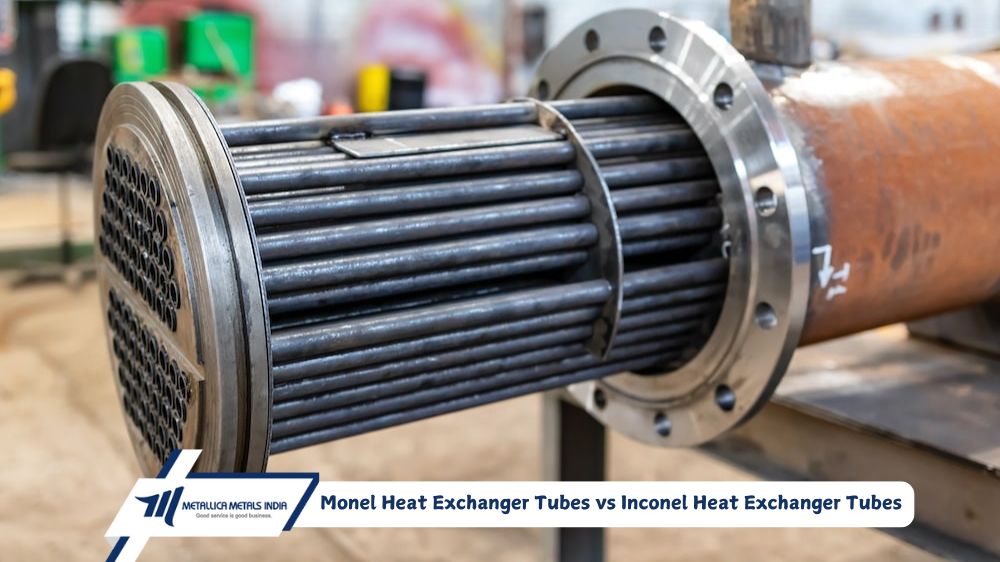
In the world of industrial heat exchangers, choosing the right tube material can either protect your system or cause major headaches down the line. If you’ve been comparing Monel and Inconel heat exchanger tubes, you’re not alone. These two alloys are often considered when corrosion, pressure, and temperature are pushing the limits.
But which one is better and more importantly which one is right for your application?
Let’s keep this simple, practical, and real-world.
Why the Right Tube Material Matters So Much
Imagine this: you’re running a plant that processes seawater, chemicals, or exhaust gases. If your tubes can’t handle the conditions, you’re looking at leaks, downtime, and expensive replacements.
That’s where Monel and Inconel come in. They’re not “just metal tubes.” They’re specialty alloys built for aggressive environments.
But the way they perform and where they perform best is very different.
Monel Heat Exchanger: Made for the Sea and Acidic Waters
Monel Heat exchanger (especially Monel 400) is a nickel-copper alloy. What makes it special is its natural resistance to corrosion in saltwater, hydrofluoric acid, and even some alkaline solutions.
Where Monel shines:
- Marine environments (desalination plants, offshore rigs)
- Acid plants with HF or sulfuric acids
- Equipment handling brine or process water
It doesn’t just survive in seawater it thrives. If you’re dealing with chlorides and low to moderate temperatures (up to ~550°C), Monel is a smart choice.
Inconel Heat Exchanger: When Heat and Pressure Are Non-Negotiable
Inconel Heat Exchanger (like 600, 625, and 718) is a nickel-chromium-based superalloy. It’s built for extremes high heat, high pressure, and oxidative environments where regular steel just can’t hold up.
Where Inconel takes the lead:
- Waste heat recovery boilers
- Refinery reactors and exhaust gas systems
- High-temperature chemical processing
- Power plants (including nuclear)
Some grades of Inconel handle temperatures beyond 1000°C and still maintain their structural integrity. That’s why it’s used in jet engines and reactors it simply doesn’t give up.
Quick Comparison Table: Monel 400 vs Inconel 625
| Feature | Monel 400 | Inconel 625 |
|---|---|---|
| Primary Resistance | Chloride & acid corrosion | Oxidation, heat & stress |
| Max Temperature | ~550°C | ~1100°C |
| Key Elements | Nickel + Copper | Nickel + Chromium + Molybdenum |
| Cost | Moderate | Higher |
| Best For | Seawater, HF acid, brine | High-temp, high-pressure systems |
What Real-World Engineers Choose
– If your system involves saltwater, chemical brines, or HF acid, most experienced engineers will lean toward Monel.
– But if you’re working with superheated steam, combustion gases, or thermal cycling, Inconel is usually the winner.
This isn’t about which alloy is “better.” It’s about which is better for your specific operating environment.
Common Mistakes to Avoid
- Using stainless steel when chlorides are present (it will pit or crack)
- Choosing Monel in high-heat zones (it’ll soften or creep)
- Assuming one material fits all (it never does)
Always talk to your supplier or engineering team before finalizing materials. A little expert advice goes a long way.
Cost Isn’t Just Price – It’s Lifecycle
Sure, Monel and Inconel are more expensive than standard alloys. But they’re not for standard jobs.
They’re for systems where failure isn’t an option where a single leak could shut down production or damage critical equipment.
In that context, investing in the right alloy from the start often works out far cheaper.
Final Thoughts: Use the Right Alloy for the Right Battle
Think of Monel and Inconel as two elite fighters each skilled in a different terrain.
- Use Monel when corrosion is the main threat.
- Use Inconel 625 when heat and pressure are relentless.
Still unsure which one fits your project best? A good supplier will not just sell, but guide. Look for detailed specs, real-world use cases, and materials that come with testing and certification.